
.avif)

Blog Summary
- Why client growth and staff burnout are usually the same underlying capacity problem
- The review bottleneck that stops most practices from growing safely
- A practical framework for adding capacity without a permanent hire or a fixed cost
- How Priya Shah at Shah & Co Accountants took on new clients without losing a weekend to review backlog
Introduction
A new client should feel like a win. For many UK practices, it feels like a risk. Every yes adds another file to review. Another deadline to track. Another evening the partner spends catching up once the team has gone home.
The usual instinct is to say growth needs more staff. That is only half true. Growth actually needs more reviewable capacity. Headcount is just one, slow, expensive way to get it.
This guide covers why practices burn out exactly when they should be thriving. It shows where the real bottleneck sits. And it explains how a flexible extended team lets you take on the next client without the partner paying for it in hours.
What Does It Mean to Take on More Clients Without Burning Out?
It means growing revenue and client count while keeping review quality, turnaround times, and staff hours stable. Burnout-free growth is not about working harder during onboarding. It is about having spare, reviewable capacity before the client arrives, not after.
Most practices grow the opposite way round. A client signs. The work starts immediately. Capacity gets found afterwards, usually out of the partner's own time. That pattern works for one client. It fails at five.
The gap between these two approaches rarely shows up on day one. It shows up three or four clients later, when the partner realises every evening this month has gone on review, and nobody planned for that in advance.
Why Does Growth Usually Cause Burnout in Accounting Practices?
Growth causes burnout because most practices scale client work faster than they scale review capacity. Bookkeeping and preparation can be delegated fairly easily. Final review, the step that catches errors before they reach a client, usually cannot. It sits with one or two partners.
According to the ICAEW, capacity and resourcing pressure remains one of the most consistently cited challenges facing small and mid-sized UK practices. Recruitment difficulty in a tight talent market makes the problem worse.
Every new client adds files to that same review queue. The team doing the preparation work can grow. The partner cannot clone themselves. That mismatch is where burnout actually starts. Not in the bookkeeping. In the sign-off.
This is also why hiring alone rarely fixes the problem. A firm can double its bookkeeping team and still hit the same wall, because the bottleneck was never bookkeeping capacity. It was always review capacity, and review capacity does not grow just because headcount does.
Who Is Responsible for Capacity Planning in a Growing Practice?
Capacity planning is usually owned by the managing partner. But in most 2 to 20 person practices, nobody owns it in a structured way. It happens reactively, client by client, once the workload is already a problem.
A structured capacity plan means someone tracks review hours against client load before onboarding, not after. Without that, the responsibility defaults to whoever is still at their desk at 7pm.
Most practices only discover this gap by accident. A partner takes a week off, and the review queue backs up in a way nobody predicted. That single week often reveals more about true capacity than a year of steady, manageable growth ever does.
When Should a Practice Add Capacity Rather Than Turn Clients Away?
Add capacity as soon as review turnaround starts slipping. Not once you are turning down leads. By the time a practice declines new clients, the review bottleneck has usually already cost it existing client satisfaction for months.
A useful early signal is turnaround time on standard files. If a straightforward VAT return or a set of monthly accounts takes noticeably longer to review than it did six months ago, that is a capacity signal. Not a one-off busy week.
Client feedback is another early warning sign worth tracking directly, rather than waiting for it to surface as a complaint. If a client mentions, even in passing, that a query took longer to answer than usual, that is often the first visible symptom of a review queue that has already been under strain for weeks.
Where Does the Review Bottleneck Actually Happen?
The bottleneck sits at final review. Specifically, the step where a partner checks reconciliations, flags outstanding debtor and creditor items, and confirms a file is client-ready. This is the one stage most practices have never successfully delegated.
It happens because review has traditionally required either full technical trust in the preparer, or the partner redoing the checking work themselves. Neither option scales past a handful of new clients a year.
This is also the exact point where a structured extended team model, backed by software that flags reconciliation issues before a human ever opens the file, changes the maths. The partner reviews what is already clean, rather than hunting for what might be wrong.
Think of it as the difference between reading a document for the first time and proofreading a document someone has already spell-checked. Both take effort. One takes far less time, and it is the second one that a partner should be doing at 7pm, not the first.
How Do You Build Capacity Without a Permanent Hire?

You build it by adding a dedicated remote accountant, or a fixed monthly hours block, that works inside your existing systems. That includes Xero, QuickBooks, Sage, or any other software your practice already uses, rather than a separate platform.
The steps that make this work in practice:
- Map where review time is actually going before adding any capacity
- Choose a flexible engagement, per hour or a fixed monthly block, so cost tracks workload rather than sitting fixed through quiet months
- Bring in support that works inside your existing software, rather than asking you to migrate data anywhere
- Use structured review tooling so the partner checks flagged exceptions, not every line from scratch
According to AccountingWeb, firms that build flexible, scalable delivery models tend to report steadier growth than those relying solely on recruitment. This is largely because capacity can flex with workload, rather than lagging behind it by a full hiring cycle.
The order of these steps matters. Practices that skip step one and jump straight to adding capacity often add the wrong kind. They bring in more preparation help when the actual constraint was always review time. Mapping where the hours go first avoids that mismatch entirely.
What Does Adding Capacity Actually Cost?
Cost is usually the first question on a discovery call, so it deserves a straight answer here rather than a vague one.
Pricing for flexible capacity, whether that is per-hour support or a fixed monthly block, depends on your client volume, the complexity of the work, and how much of it needs partner-level review versus preparation. There is no single number that fits every practice, which is exactly why most providers, Finqube included, prefer to scope pricing against your actual client list on a call.
What is worth flagging directly: any provider quoting a fixed percentage saving against an in-house hire, without showing the underlying maths, is a claim worth asking about rather than accepting at face value. Salary, National Insurance, pension contributions, recruitment cost, and management overhead all vary a lot between practices. A meaningful comparison should show its working, not just its headline number.
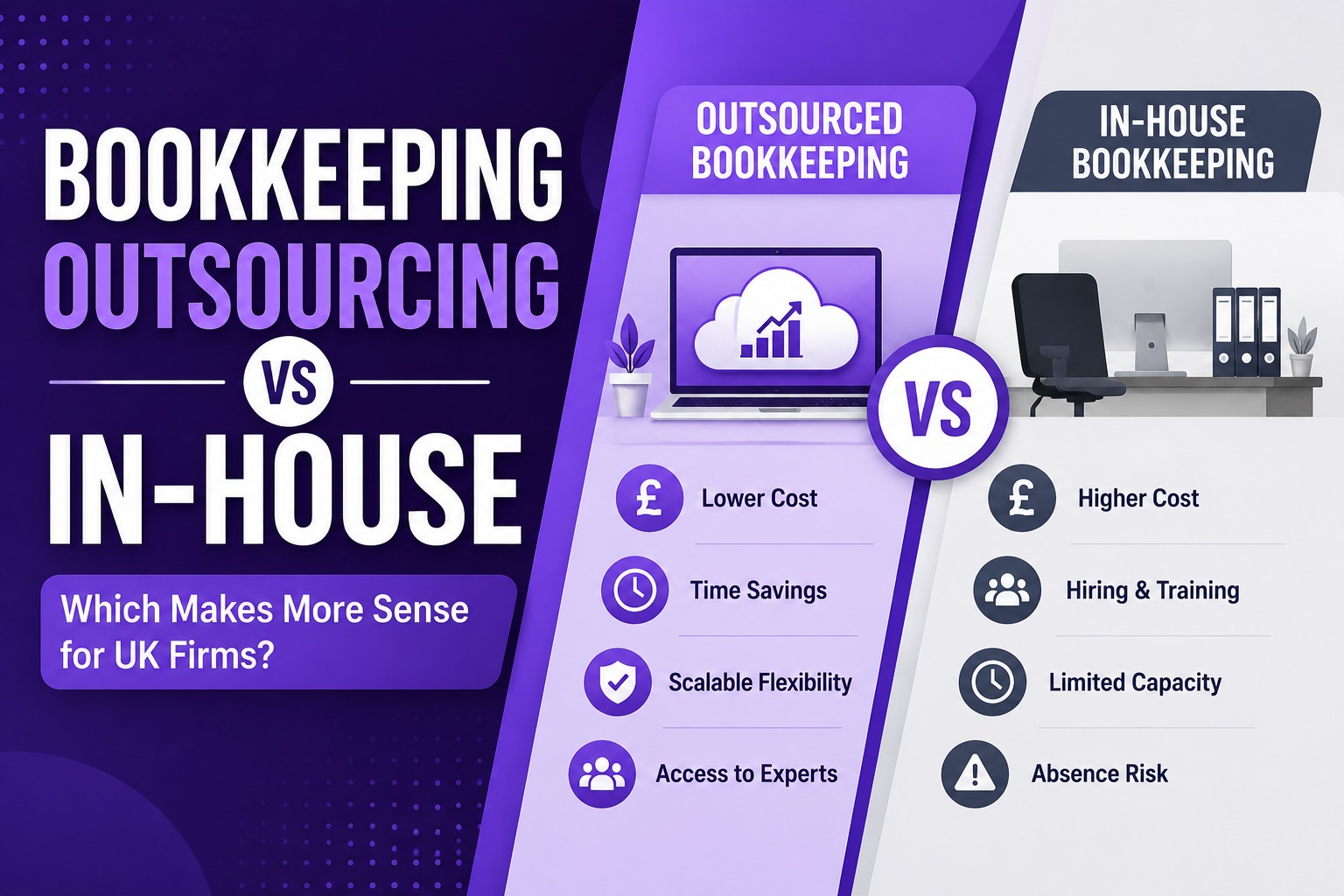
Finqube vs In-House Hire vs Traditional Remote Provider
Finqube's engagement models start with no minimum commitment. You can work per hour for overflow and one-off projects, or move to a fixed monthly hours block once workload is predictable. Neither route requires signing into a permanent employment cost.
For exact figures against your own client book, book a discovery call rather than relying on a generic industry comparison.
Real Scenario: Priya Shah at Shah & Co Accountants
Priya Shah runs Shah & Co Accountants in Leeds. She had turned away two prospective clients in a single quarter. Not because her team lacked the skill, but because she knew she could not review any more files without giving up her weekends entirely.
After bringing in a dedicated Finqube accountant working inside her existing Xero setup, with reconciliation issues flagged automatically before files reached her desk, Priya recovered around 12 hours a week by month two. She took on both clients she had previously declined, without adding a single permanent hire.
What changed was not her team's skill or their workload volume. It was where the review time actually went. Files that used to need a full line-by-line check now arrived at her desk already flagged, so she was confirming, not hunting.
How Finqube Can Help
Every Finqube engagement includes a dedicated accountant working inside your existing systems, whether that is Xero, QuickBooks, Sage, FreeAgent, or any other software your practice already runs on.
Alongside that accountant, structured review support gives you a live view of file status. It flags reconciliation mismatches, outstanding AP and AR items, and common preparation errors before a file ever reaches your review. You check what is already clean, rather than hunting for what might be wrong.
There is no minimum term attached to any engagement. You can start with overflow hours for a single busy month, or move to a dedicated accountant once your growth becomes steady rather than seasonal.
Explore the engagement models, including per-hour and fixed monthly options, on the Finqube engagement models page.
Conclusion
Taking on more clients should not mean trading your evenings for revenue. The practices that grow steadily are the ones that solve the review bottleneck before it solves them. Usually with flexible capacity, rather than a slow, expensive, permanent hire.
Capacity planning is not a one-off fix either. It is worth revisiting every time your client count moves noticeably, not just when a review backlog forces the conversation.
If you want to see what added capacity would look like for your practice, book a discovery call. There is no minimum commitment attached, and no pressure to sign anything before you see the numbers against your own client book.
One month. No contract.
See how a dedicated Finqube accountant fits into your MTD workflow before you decide.
Start your free pilotFAQ
How many new clients can an accounting practice take on before service quality drops?
There is no fixed number. What matters is review capacity, not client count. A practice with a strong review layer and flexible extra capacity can take on new clients steadily. A practice where the partner reviews everything alone will hit a wall long before headcount suggests it should.
Is outsourcing bookkeeping and accounts prep safe for client confidentiality?
Yes, provided the provider works inside your existing systems under your access controls and confidentiality agreements, rather than moving data onto separate platforms. Ask any provider how client data is stored, and who can access it, before signing anything.
What is the difference between hiring a junior and using a dedicated remote accountant?
A junior hire takes months to recruit, train, and bring up to your standard. It also remains a fixed cost even in quiet months. A dedicated remote accountant deploys within one to two weeks, works inside your existing workflow, and can flex with your workload.
Will clients notice if part of the work is done by an extended team?
Not if it is set up properly. Clients see the partner and the firm. The extended team member works inside your systems, under your processes. Every file gets reviewed before it reaches sign-off, the same as any staff member's work would be.
How much does it cost to add capacity this way compared with hiring?
Cost depends on your client volume and how much of the work needs partner-level review. Ask any provider to show the full comparison against an in-house hire, including National Insurance, pension contributions, and overhead, rather than relying on a single headline percentage.
What happens during busy periods like January or VAT quarter ends?
This is where flexible capacity earns its cost. Rather than a fixed headcount sitting idle in quiet months, hours can scale up during Self Assessment season, VAT quarters, and payroll year end, then scale back down once the deadline passes.
How quickly can a practice add extra capacity once it decides to?
Typically one to two weeks from decision to a dedicated accountant working inside your systems. A standard UK recruitment process usually takes three months or more.