.avif)

Blog Summary
- What payroll outsourcing actually costs per employee in the UK right now
- Why fully managed and part managed pricing models charge such different rates
- The hidden fees that turn a cheap quote into an expensive one by month three
- How to compare providers on total cost, not just the headline per payslip price
What Does Payroll Outsourcing Cost in the UK?
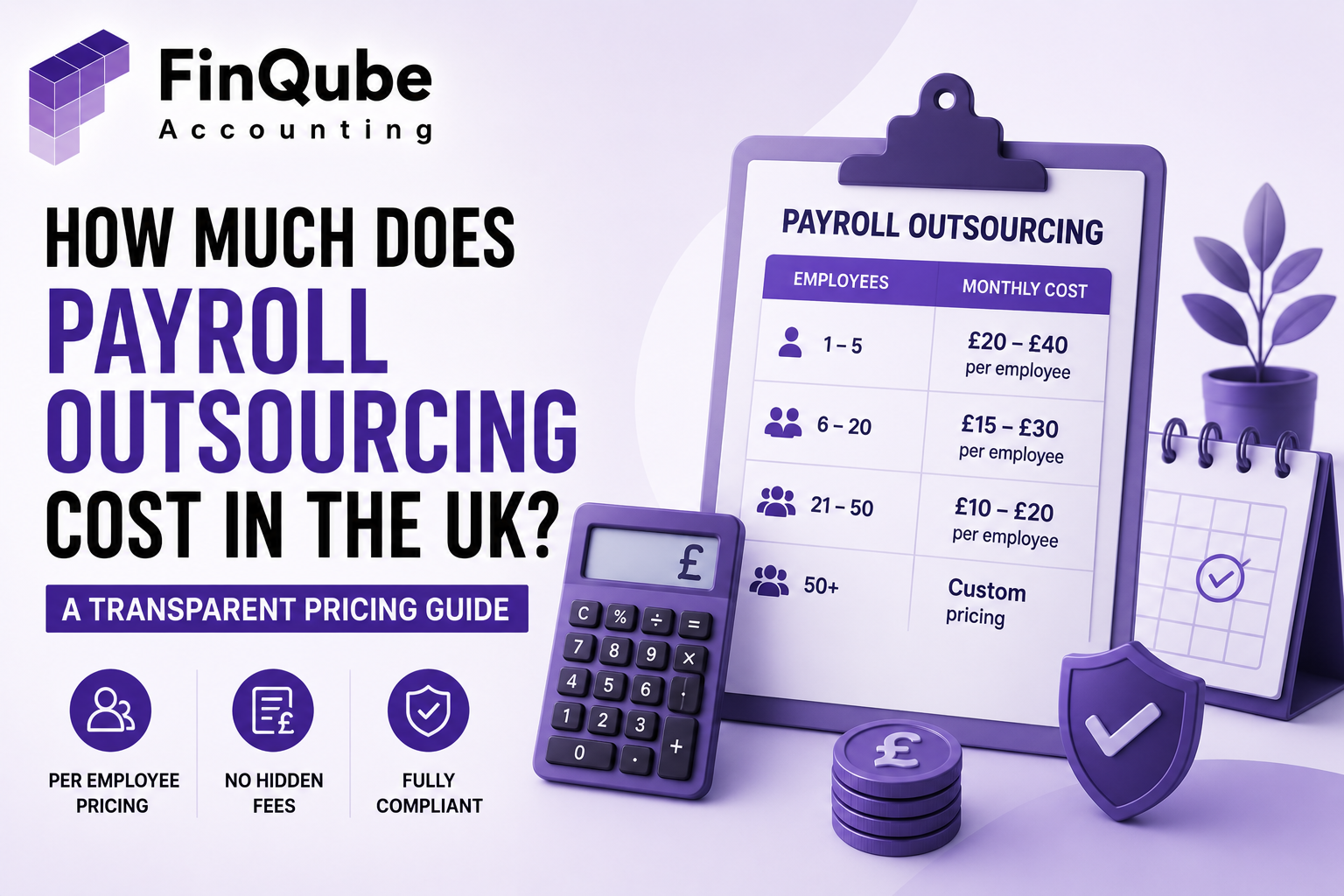
Payroll outsourcing in the UK typically costs between £4 and £15 per employee per month, or £3 to £8 per payslip. It depends on the service level. Most small teams also pay a minimum monthly fee.
Say you have fewer than five employees. Expect a fixed monthly fee of £25 to £80, even if the per-employee rate looks lower on paper. Providers set this floor because small payrolls still take real admin time.
Larger, named providers charge differently again. IRIS charges a base fee from roughly £39, plus £1.95 per extra payslip. Payescape starts around £53 a month. Moorepay charges roughly £50 for up to 10 staff. These are list prices, and they change with headcount and contract length.
Here is a snapshot of what UK businesses are actually paying, based on current provider pricing across the market.
However, the per employee rate rarely tells the whole story. Setup fees, RTI submissions, and year end work often sit outside the base package.
Here is an example. A practice runs payroll for 20 employees on a fully managed service at £10 per employee a month. That is £200 a month, or £2,400 a year, before any add ons.
Add one round of year end processing at £100 and pension admin at £25 a month. The true annual cost rises to £2,800, a 17% jump from the headline figure alone.
According to the Office for National Statistics, small and medium sized businesses make up over 99% of the UK business population. Most of these run payroll through a bureau or an outsourced provider, not an in-house team. Getting this cost calculation right matters at scale.
Why Do Payroll Outsourcing Costs Vary So Much Between Providers?
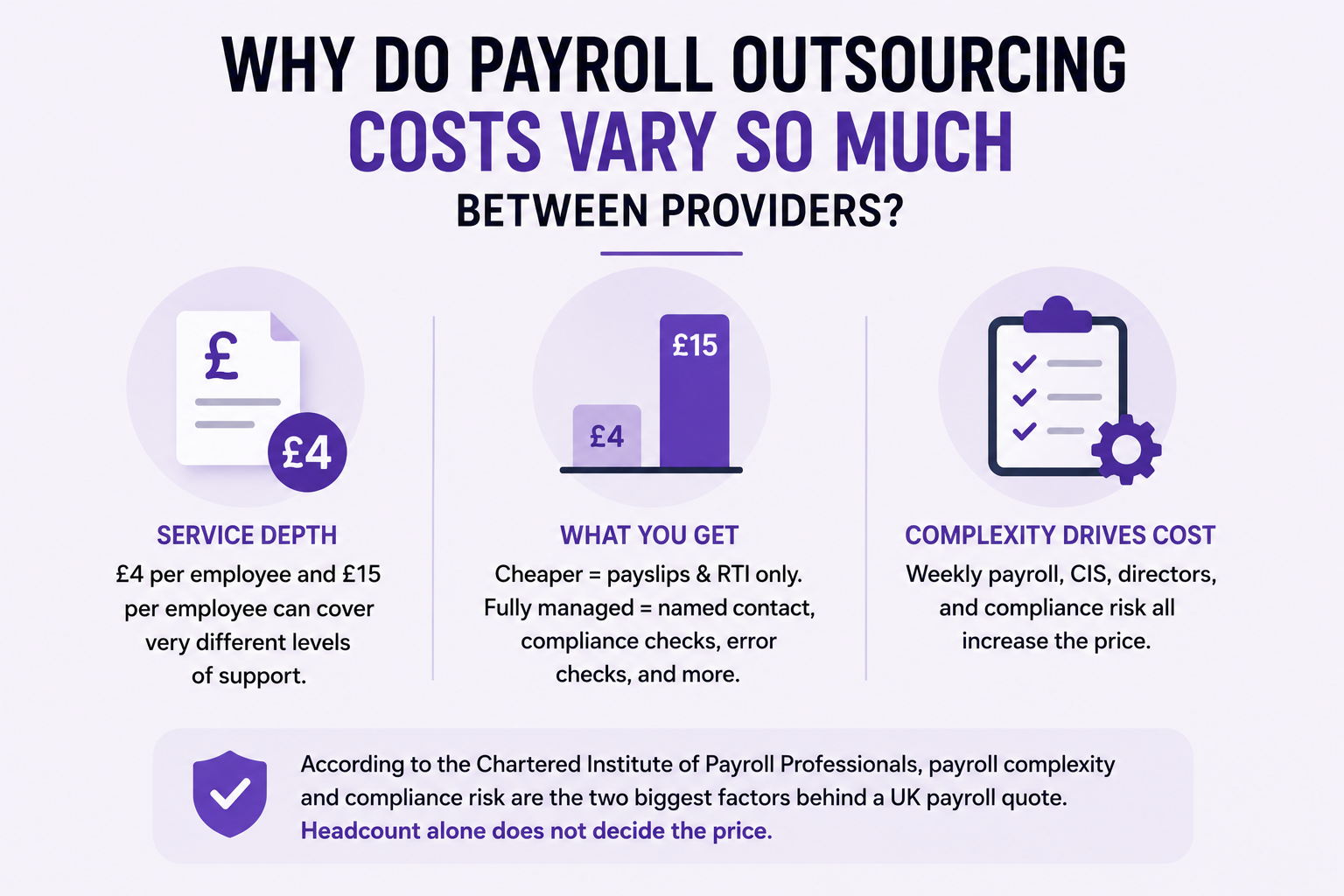
Payroll outsourcing costs vary because providers price for service depth, not just headcount. A £4 per employee quote and a £15 per employee quote can cover very different levels of support.
Cheaper providers usually process payslips and RTI submissions only. You still handle queries, corrections, and compliance checks yourself.
Fully managed services cost more, but they include a named contact and active HMRC compliance checks. They also check for errors before payslips go out. That extra care is where most of the price gap sits.
Complexity also drives cost. A practice running weekly payroll, CIS subcontractors, and directors' payroll pays more than one running simple monthly PAYE for salaried staff. According to the Chartered Institute of Payroll Professionals, payroll complexity and compliance risk are the two biggest factors behind a UK payroll quote. Headcount alone does not decide the price.
Who Needs to Budget for Payroll Outsourcing Costs?
Any UK accounting practice that manages payroll for clients needs to budget for these costs. So does any business with staff on PAYE. This includes practices that run payroll in-house today and are weighing up outsourcing, as covered in our guide on outsourced payroll providers UK.
Practice owners with 2 to 20 staff feel this pressure the most. You are stretched across bookkeeping, VAT, and payroll deadlines every single month.
Say your practice runs payroll for multiple clients. Your cost planning needs to include setup fees per client, not just per employee rates. Ten clients with five employees each is a very different quote to one client with fifty employees.
Business owners who handle payroll directly, without an accounting practice in between, need this budget too. HMRC requires accurate PAYE and RTI submissions no matter who processes them, and errors carry real financial risk.
A five person practice running payroll for 15 clients has a very different cost profile to a single 60 employee business. The practice needs to plan for setup costs per client. The single business needs to plan for costs per employee instead.
Practices that grow past 10 clients often reach a turning point. A fixed monthly fee becomes more predictable than a per payslip rate. It removes the guesswork of forecasting bills that shift every month as the client base grows.
When Do Payroll Outsourcing Costs Change During the Year?
Payroll outsourcing costs typically spike at three points: year end, in April when new tax year rates apply, and whenever you add or remove an employee mid contract. Budget for these separately from your monthly base fee.
Year end processing, including P60s, often costs an extra £50 to £150 on top of your monthly fee. P11D filing for benefits in kind adds £20 to £40 per form.
April brings new National Insurance thresholds, National Minimum Wage rates, and student loan repayment bands. According to GOV.UK, employers must apply updated payroll figures from the start of each new tax year. Providers sometimes charge extra for this update work. Our guide to RTI payroll UK covers how these submissions work in more detail.
Mid year changes also cost money. Adding a new starter, processing a leaver, or paying a director outside the normal cycle often triggers a one off charge. Some providers charge £15 to £30 per extra run.
Where Do the Hidden Costs in Payroll Outsourcing Come From?
Hidden costs come from services left out of the base package. This usually means setup, year end filing, pension admin, and CIS processing for construction clients. Always ask what is included before you sign.
The table below shows where practices most commonly get caught out by add on charges that were not clear in the initial quote.
Here is why this matters. A provider quoting £6 per employee per month can end up costing 40% more once setup, year end, and pension admin are added. Always ask for a full annual cost estimate, not just the monthly headline figure.
Integration fees are another common surprise. Your provider may need to connect to Xero, QuickBooks, Sage, FreeAgent, or any other software your practice runs. Ask whether that setup is a one off charge or a monthly line item.
Some providers also charge extra for off cycle payments, such as a bonus run outside the normal payroll calendar. This can catch practices out in December, when many clients want quick, ad hoc payments.
How Do You Compare Payroll Outsourcing Costs Properly?
Ask every provider for the same three numbers: the total monthly fee, the total annual cost with add ons, and what triggers an extra charge. Do not compare headline per payslip rates alone.
Start by listing every task your payroll actually needs. This means RTI submissions, pension auto enrolment, CIS, directors' payroll, and year end filing. Ask each provider to quote against that exact list, and check how they stack up against the best payroll outsourcing companies for UK accounting firms.
Next, ask what happens when your headcount changes mid contract. Some providers rebill you monthly. Others lock you into a fixed annual rate, even if your headcount changes slightly.
Finally, ask about the minimum commitment. A 12 month contract carries more risk than paying month to month. This matters most if you are switching from an in-house setup, or from Xero, QuickBooks, Sage, FreeAgent, or any other software, for the first time.
Do you work inside my existing Xero, QuickBooks, Sage, FreeAgent, or any other software setup, or do I have to migrate?
Real Practice, Real Numbers: Bramwell Payroll Solutions
Bramwell Payroll Solutions is a five person accounting practice in Leeds. It was paying a bureau provider £6 per employee per month across 40 client payrolls.
The headline quote looked good. But the practice owner, Marcus Bramwell, only found the real cost after his first year end.
Year end processing, P11D filing for three clients with company cars, and CIS processing for two construction clients added just over £2,100 to his annual bill. None of it was on the original quote.
Marcus also had no single point of contact. Every query went through a shared inbox. Urgent director payroll queries took up to three working days to answer.
He switched to a dedicated remote accountant with a fixed monthly fee. That fee included year end, CIS, and pension admin upfront. His annual spend dropped by 18%. Every query now goes to one named accountant who already knows his client files.
Marcus's experience is common. According to the CIPP's own reporting on the payroll bureau market, unclear scope is the top reason UK clients complain about outsourced payroll providers.
How FinQube Can Help
A cost comparison only helps if the fee you agree is the fee you pay. FinQube prices payroll support as one fixed monthly amount. There is no per payslip rate with add ons waiting to appear later.
You get one dedicated, named accountant for your payroll, not a shared support pool that rotates between clients. That accountant learns your client base and stops treating every query as a brand new ticket.
FinQube works inside the systems you already use: Xero, QuickBooks, Sage, FreeAgent, or any other software you run for client payroll. There is no migration project before you can start.
Every payroll file passes through FinQube's own AI review before your team signs it off. It flags reconciliation mismatches, missing RTI data, and pension errors automatically, before they reach a client's payslip.
FinQube has no minimum commitment. There is no lock in contract beyond the services agreement itself, so switching does not take a leap of faith.
IR35 status matters for how you structure support. FinQube works on a services agreement basis, not labour supply. This keeps the relationship clean for practices that have been caught out by this before, and it removes the risk HMRC applies to employment status and off payroll working rules.
Because your price is fixed and agreed upfront, you can quote your own clients with confidence. There is no risk of a mid year surcharge eating into a margin you have already promised a client.
See what a fixed, all inclusive payroll fee actually looks like for your practice. Talk to FinQube about a dedicated accountant and one predictable monthly cost, with no year end surprises.
Conclusion
Payroll outsourcing cost in the UK sits between £4 and £15 per employee a month. But the real number depends on setup fees, year end filing, and pension admin, and these rarely appear in the headline quote. Compare total annual cost, not per payslip pricing alone. Ask every provider the same questions about scope, contract length, and what triggers an extra charge. A fixed monthly fee with a named accountant removes most of the guesswork that catches practices out every April.
Most practice owners we speak to have been caught out by a payroll invoice at least once. That surprise is avoidable with the right pricing structure from day one. Talk to FinQube today to see a transparent, fixed fee payroll quote.
One month. No contract.
See how a dedicated Finqube accountant fits into your MTD workflow before you decide.
Start your free pilotFrequently Asked Questions
How much does it cost to outsource payroll for a small business in the UK?
Small businesses typically pay £25 to £80 a month as a minimum fee. Once headcount rises above five, expect £4 to £15 per employee a month. Setup and year end fees usually sit on top of this.
What is included in a standard payroll outsourcing fee?
A standard fee usually covers payslip processing, PAYE calculations, and RTI submissions to HMRC. Year end filing, pension auto enrolment admin, and CIS processing are often charged separately.
Is payroll outsourcing cheaper than hiring an in-house payroll administrator?
For practices under 50 employees, outsourcing is almost always cheaper. This holds true once you factor in salary, software licences, and training. An in-house payroll administrator in the UK typically costs £25,000 to £32,000 a year before overheads.
How much does payroll setup cost when switching providers?
Setup costs range from £30 to £150 for simple payroll. Expect £150 to £500 if your business has complex pay structures, multiple pay frequencies, or CIS subcontractors.
Do payroll outsourcing costs include pension auto enrolment?
Not always. Pension auto enrolment admin often costs an extra £15 to £40 a month, and setup can add £50 to £200 on top. Confirm this before you sign any contract.
What is a fair price for payroll outsourcing per employee?
£4 to £15 per employee a month is the typical fair market range for fully managed UK payroll in 2026. The exact price depends on complexity and how much named support is included.
Can payroll outsourcing costs increase mid contract, and do I need a fixed term contract?
Yes, costs can rise. This usually happens when headcount grows, when you add CIS subcontractors, or at year end when P60 and P11D work applies. Most bureau providers also ask for a 6 to 12 month minimum term. Some dedicated accountant models, however, offer no minimum commitment at all.