.avif)

Blog Summary
- What outsourced accounting services in the UK actually involve, and why most arrangements fall short
- Why UK practice owners are turning to dedicated remote accountants rather than traditional outsourcing models
- The key questions to ask before committing to any outsourced accounting arrangement
- How Finqube's dedicated remote team model with proprietary AI review gives you visibility and control, not just capacity/
Introduction
Most practice owners we speak to have already tried an outsourced accounting arrangement. It did not work. The work came back wrong, there was no visibility into what was happening, and chasing the provider for updates took almost as long as just doing it themselves.
Outsourced accounting services in the UK have a credibility problem. Not because the model is broken. Because most of the market is built on headcount and low cost rather than accountability and review quality.
This guide covers what genuinely works, what to avoid, and how a dedicated remote accountant embedded in your systems can solve capacity without sacrificing the control your clients expect.
What Are Outsourced Accounting Services in the UK?
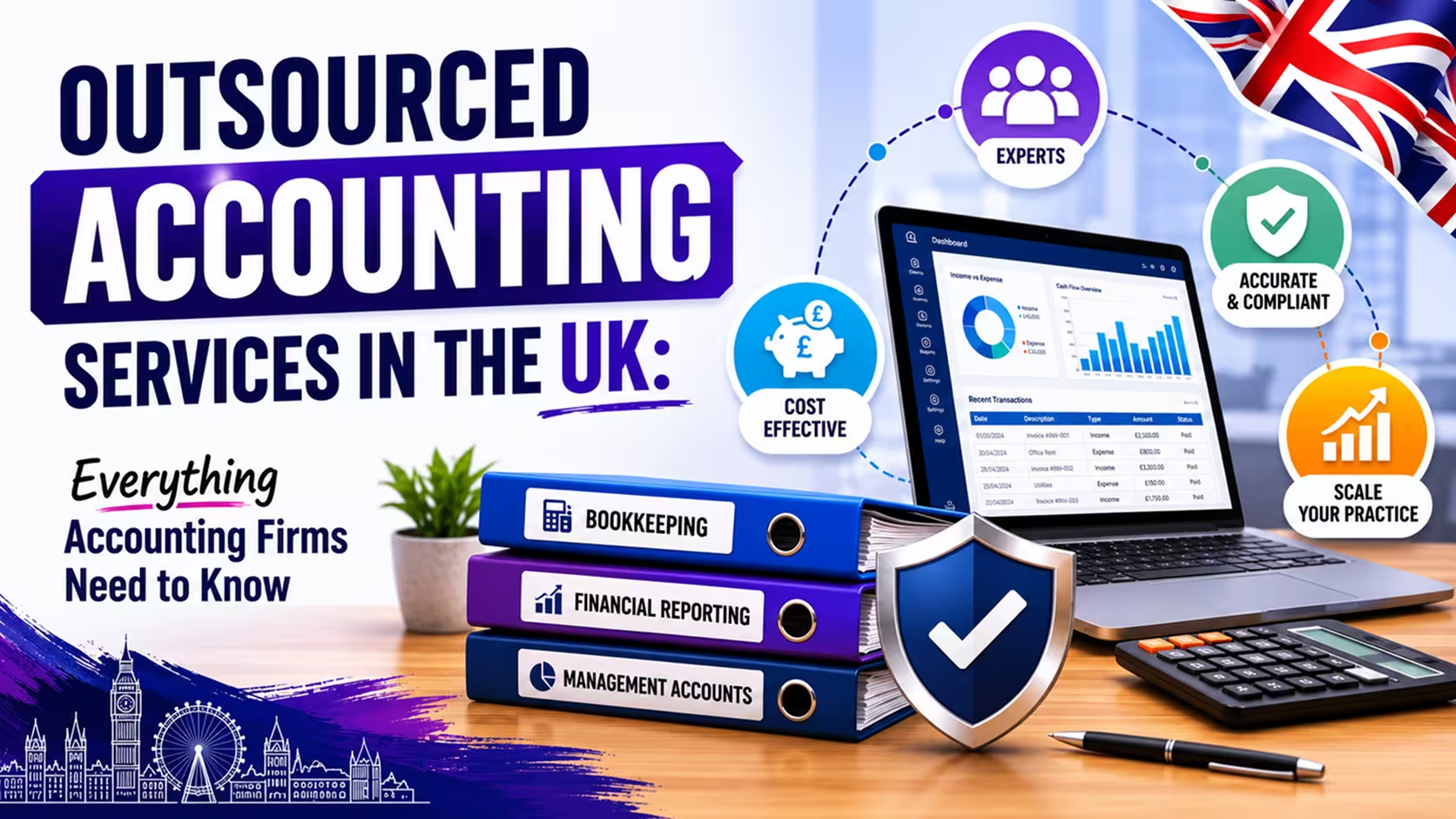
Outsourced accounting services in the UK refers to the practice of delegating accounting tasks, such as bookkeeping, VAT returns, payroll, management accounts, and year-end preparation, to a third-party provider or remote team rather than handling everything in-house.
For UK accounting firms specifically, outsourcing typically means bringing in additional capacity to handle client work. The model varies widely. Some providers offer anonymous shared teams with no dedicated contact. Others offer dedicated accountants who work inside your systems and follow your processes.
The distinction matters more than most firms realise before they commit.
Common services covered under outsourced accounting arrangements include:
- Bookkeeping and bank reconciliation
- VAT return preparation and filing
- Payroll processing and auto enrolment
- Management accounts preparation
- Year-end accounts and corporation tax support
- Accounts payable and receivable management
- Data migration and software cleanup
Why Do UK Accounting Firms Outsource in the First Place?
UK practice owners outsource accounting work for one primary reason: they have run out of capacity and cannot hire fast enough to keep up.
According to ICAEW, the UK accounting profession has faced persistent talent shortages, with vacancy rates in practice roles remaining elevated across small and mid-size firms. Hiring a qualified accountant at the right level takes three to six months. That timeline does not pause for a busy tax season or a client who just doubled their transaction volume.
The secondary driver is cost. A full-time senior accountant in a UK practice costs between £35,000 and £55,000 in salary alone, before employer NI contributions, pension auto enrolment, office costs, and management time. Outsourced accounting support, done correctly, delivers dedicated capacity at a fraction of that overhead.
The third driver, rarely spoken but consistently present, is risk. Partners who carry everything in their head are a single point of failure. Outsourcing certain processes means the work still gets done when your best person is sick, leaves, or is simply overcommitted.
Who Should Consider Outsourced Accounting Services?
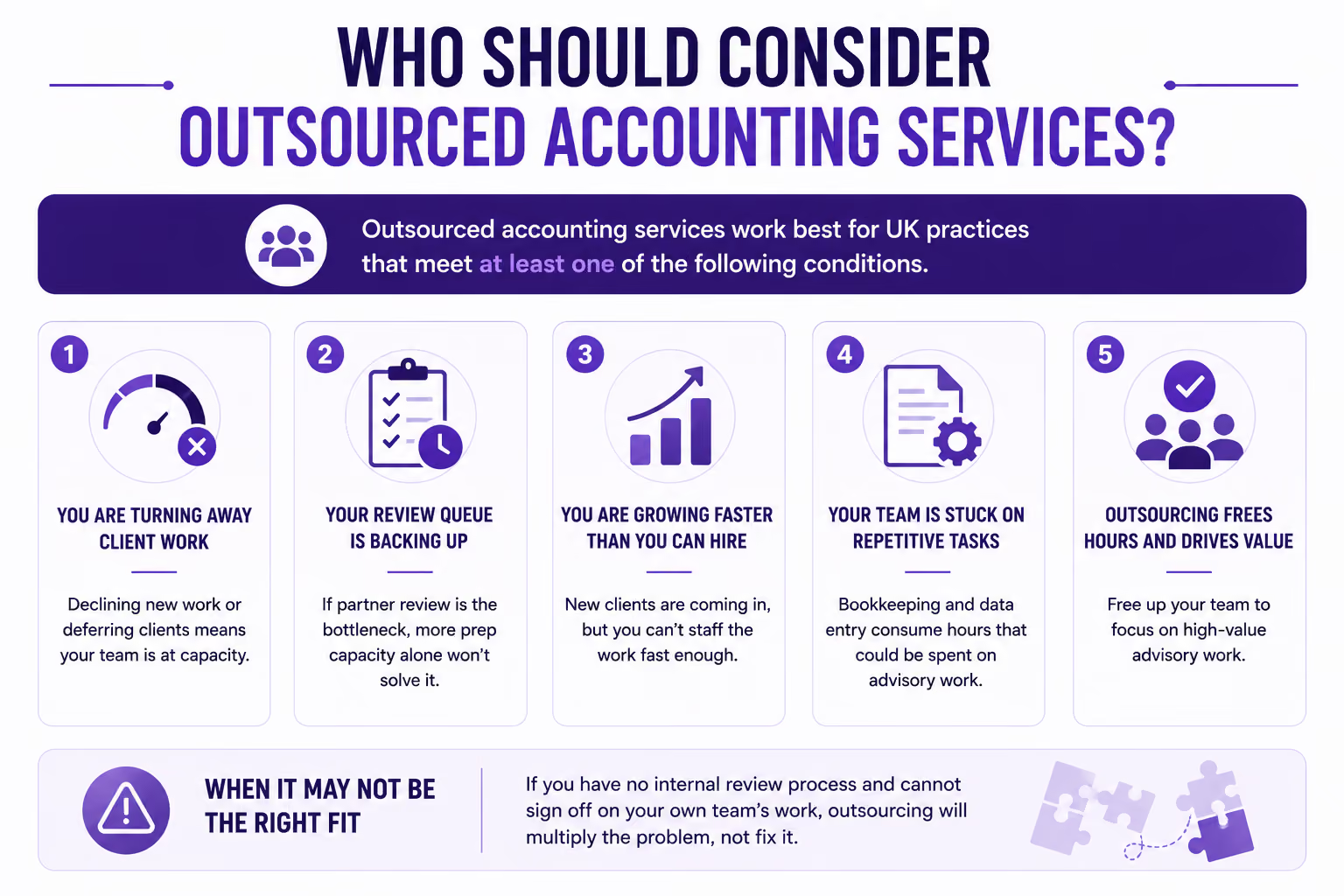
Outsourced accounting services work best for UK practices that meet at least one of the following conditions.
You are turning away client work. If your current team is at capacity and you are declining new instructions or deferring existing clients, you have a capacity problem that hiring cannot solve quickly enough.
Your review queue is backing up. If partner review is the bottleneck in your month-end or year-end process, adding more prep capacity downstream without adding review capacity upstream will not resolve it.
You are growing faster than you can hire. Hiring follows revenue. If you have closed new clients but cannot staff the work, you are either underdelivering or burning out your existing team.
Your team is stuck on repetitive tasks. Bookkeeping and data entry at scale consume hours that your senior staff should spend on advisory work. Outsourcing the preparation layer frees those hours.
Outsourced accounting is less well suited to firms that have no internal review process. If you cannot currently sign off on what your own team produces, adding a remote team will not fix the underlying problem. It will multiply it.
When Is the Right Time to Bring in Outsourced Accounting Support?
The right time is before a crisis, not during one.
Most practice owners contact an outsourced provider in January, March, or July. Those are the peak stress months. VAT quarters, self assessment filing, year-end rushes. Onboarding a new remote team during your busiest period is the worst possible time to do it, because onboarding requires your attention.
The right time to consider outsourced accounting support is when your capacity is at 70 to 80 percent, not 100 percent. At that point, you have enough headroom to onboard properly, document your processes, and set expectations before the pressure arrives.
A good outsourced provider can deploy a dedicated accountant in one to two weeks. That timeline assumes you are ready. Most practices are not, because they have waited too long.
Where Do Most Outsourced Accounting Arrangements Go Wrong?
This is the section most outsourcing providers will not write. But it is the question UK practice owners ask most often, usually because they have already been burned.
No dedicated contact. Many outsourcing providers assign your work to a pool of staff. The person working on your bookkeeping this week is not the same person next week. No continuity means no context, and no context means more errors.
No integration with your systems. If the remote team works in their own software and sends you files to import, you have created a handoff problem, not solved one. Every export and re-import introduces error risk and loses the audit trail your review depends on.
No review process at the provider's end. You are expected to catch every error yourself. That negates the time saving. If you are reviewing everything line by line, you might as well have done it in-house.
No visibility until submission. You are sent a completed file and expected to approve it. You have no way of knowing what happened between instruction and delivery. If it is wrong, the entire thing needs to be redone.
Misaligned quality standards. UK practices have specific expectations around Companies House formatting, HMRC submission standards, and client-facing presentation. Many outsourced providers are calibrated to different markets and require significant reworking before output is client-ready.
What About Data Security and GDPR?
For most UK accounting firms, capacity is only part of the outsourcing decision. Client financial data, payroll records, VAT information, and company accounts are all sensitive information subject to UK GDPR requirements. Before engaging any outsourced accounting provider, firms should understand how data is accessed, stored, and monitored.
A professional provider should operate within secure cloud environments, use role-based access controls, maintain audit trails, and ensure all team members work under documented confidentiality and data protection policies. Access should be granted only to the systems required for the engagement and removed immediately when no longer needed.
The practical question is not whether a provider works remotely. It is whether they can demonstrate the same level of security, accountability, and compliance that you would expect from an in-house employee. Data handling processes, GDPR compliance procedures, and information security controls should be part of every provider evaluation.
How Does a Dedicated Remote Accountant Actually Work With Your Practice?
A dedicated remote accountant, done properly, works inside your existing systems, follows your processes, and is accountable to your review. Not to a remote team manager you have never spoken to.
The working model looks like this:
- Onboarding (week one to two): The accountant is given access to your practice management software, cloud accounting platforms (Xero, QuickBooks, Sage, or FreeAgent), and your internal process documents.
- Work allocation: You assign client files and tasks through your existing workflow, exactly as you would with an in-house team member.
- Preparation: The accountant completes work inside your systems. Nothing is exported and reimported. The file stays in the same environment your team uses for review.
- Pre-review quality check: Before the file reaches your desk, it has been checked against internal quality standards. Reconciliation mismatches, outstanding AP items, and common preparation errors are flagged before you spend a minute on it.
- Partner review: You review a file that is already clean. Not a file that requires you to go back and request corrections.
This model collapses the review cycle. It turns a three-day back-and-forth into a same-day sign-off.
Outsourced Accounting vs Hiring In-House vs Finqube: A Direct Comparison
How Finqube Can Help
Finqube provides dedicated remote accountants for UK accounting practices. Every engagement includes one dedicated accountant who works inside your existing systems, and access to our proprietary AI review software at no extra cost.
The AI review software is not a product feature. It is the mechanism that gives you visibility before you review. Before a file reaches your desk, the software has already flagged reconciliation mismatches, outstanding AP items, and common preparation errors. You see the issues. You do not discover them.
Key capabilities built into every Finqube engagement:
We work with practices on Xero, QuickBooks, Sage, and FreeAgent. There is no software change required.
Every engagement starts with a one-month free pilot. No contract. No commitment past month one. You see how it works before you decide.
If you want to understand the dedicated accountant model in more detail, the FTE model page covers exactly how it works. For senior review capacity across specialist work, The Squad is designed for that. To understand what the AI review software gives you in practice, that page explains each capability.
Conclusion
Outsourced accounting services in the UK have a poor reputation among practice owners who have tried them and been let down. Most of that disappointment comes from anonymous shared teams, no integration with existing systems, and no review process before files land on your desk.
The model that works is not outsourcing in the traditional sense. It is a dedicated remote accountant who works inside your practice, follows your processes, and gives you visibility before you review, not after.
If you are at 70 to 80 percent capacity and you know you need to do something before the pressure peaks, the one-month free pilot is the lowest-risk way to find out whether it works for your practice.
FAQ
What is the difference between outsourced accounting services and hiring a remote employee?
An outsourced accounting arrangement typically involves a third-party service provider delivering accounting support under a commercial services agreement rather than an employment contract. A dedicated remote accountant through a provider like Finqube gives you named, consistent support without the responsibilities associated with direct employment, such as payroll administration, pension contributions, employee benefits, or recruitment management.
For UK firms concerned about post-IR35 compliance, this distinction is important. Finqube operates as a service provider delivering outsourced accounting support rather than a labour supply arrangement. The engagement is structured around service delivery and defined outcomes rather than the employment of an individual within your organisation.
How quickly can an outsourced accountant be up and running with my practice?
A well-run deployment takes one to two weeks. This covers system access, process handover, and a review of your existing client files. The main variable is how prepared your practice is. Firms with documented processes and clear access credentials deploy faster.
Are outsourced accounting services in the UK regulated?
The provider should hold appropriate professional body memberships, and any accountants working on client files should be qualified or supervised by qualified professionals. When evaluating a provider, ask directly about qualifications, supervision structures, and professional indemnity insurance.
What accounting software do outsourced accountants work with?
Most modern providers work across Xero, QuickBooks, Sage, and FreeAgent. Finqube works across all four. If your practice uses a niche or legacy platform, confirm compatibility before committing.
What happens if the outsourced accountant makes an error?
This is the question most providers answer vaguely. The correct answer is: there should be a defined review process on the provider's side before the file reaches you, a named accountable person when something goes wrong, and professional indemnity insurance covering any client losses. Ask for all three before signing.
How much do outsourced accounting services in the UK cost?
Pricing varies by model and scope. Traditional providers charge by the hour or by task volume. Finqube operates on a fixed monthly model based on the level of support required. For a direct comparison of what dedicated remote support costs versus in-house hiring, the ROI calculator gives a UK-specific breakdown.
Can I outsource only part of my accounting work?
Yes. Most practices start by outsourcing one service area, such as bookkeeping or VAT preparation, and expand once they have confidence in the quality. A structured pilot period is the best way to test this without committing your full workflow.