
.avif)

Blog Summary
- What: What is accounting outsourcing?
- Why: Why are UK firms turning to accounting outsourcing?
- Who: Who should consider outsourcing accounting work?
- When: When should a firm consider outsourcing?
- Where: Where do outsourcing risks usually show up?
Introduction
Hiring is slow. Your clients are not.
A practice wins new work. The team gets stretched. Deadlines get tighter. The usual fix is to hire another accountant. But recruitment can take months. Training takes longer. Meanwhile, the backlog grows.
This is why more UK practices now use accounting outsourcing. It adds capacity fast. It does not require a new desk or a new payroll line. You get support this month, not next quarter.
This guide explains what accounting outsourcing is, what you can outsource, and how to avoid the risks that trip up firms who get it wrong.
What Is Accounting Outsourcing?
Accounting outsourcing means handing specific accounting tasks to an external team. You keep control of client relationships. You keep final sign-off. The outsourced team does the production work.
Firms commonly outsource:
- Bookkeeping
- VAT returns
- Payroll processing
- Accounts preparation
- Corporation tax support
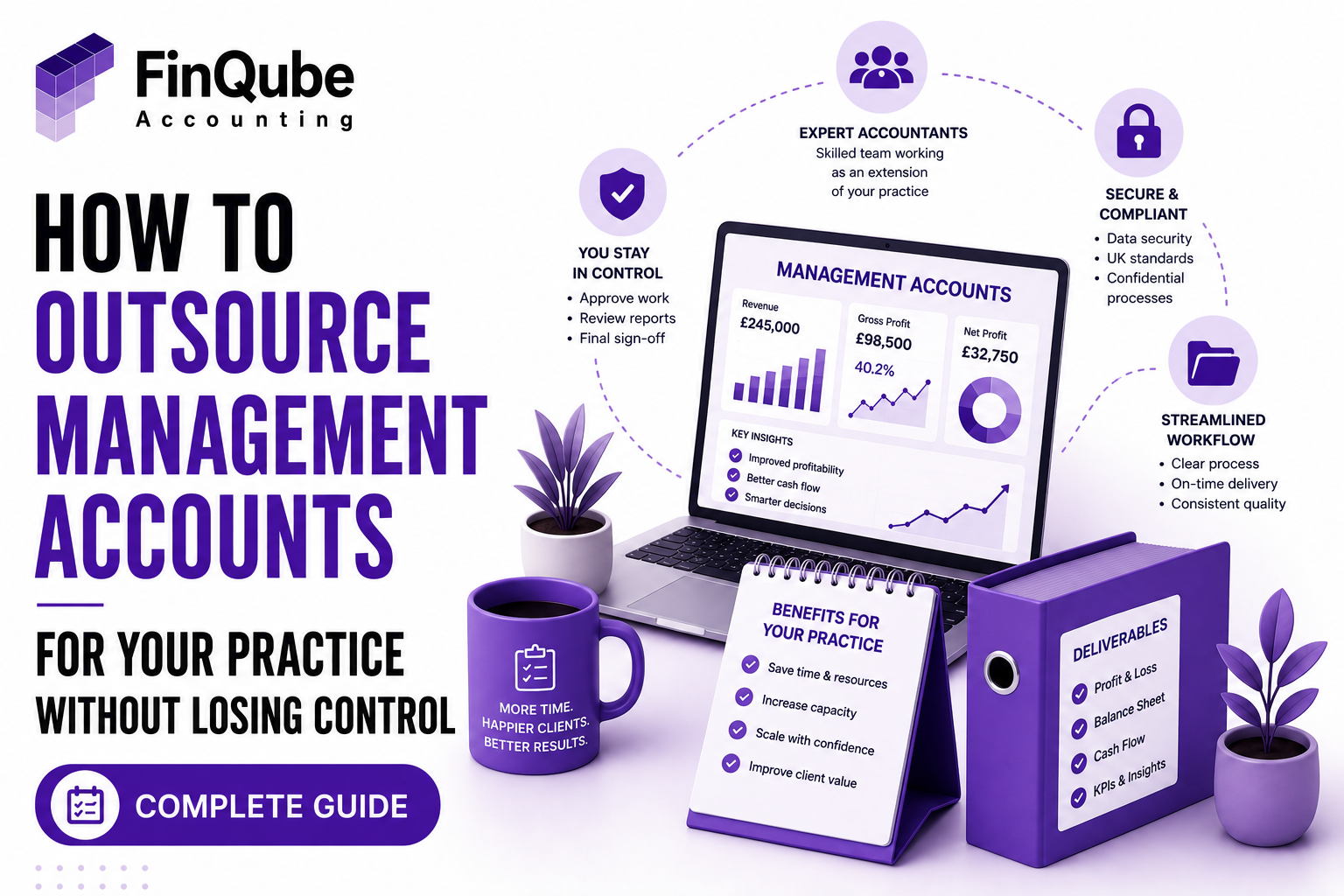
- Management accounts
- Accounts payable and receivable
The outsourced team should work inside your systems. Not around them. That means Xero, QuickBooks, Sage, FreeAgent, or any other software you already run.
Most firms now treat outsourcing as a capacity strategy. Not a cost-cutting exercise. According to ICAEW's guide to outsourcing your finance function, firms that plan outsourcing around clear scope and review structure see better outcomes than firms that treat it as a quick fix.
Why Are UK Firms Turning to Accounting Outsourcing?
Most firms outsource because of capacity pressure. Not because of cost pressure.
A dedicated remote accountant can start work far faster than a new hire clears notice periods and onboarding. That speed is the real draw. AccountingWeb has reported that UK practices increasingly cite staff shortages, not price, as their main reason for exploring outsourced support.
Which Accounting Functions Can Be Outsourced?
Almost any operational accounting task can move to an outsourced team, as long as review controls stay in place.
Bookkeeping Services
Bookkeeping is the most commonly outsourced function. Tasks include:
- Bank reconciliations
- Transaction categorisation
- Purchase ledger processing
- Sales ledger management
- Month-end bookkeeping
- Cloud accounting maintenance in Xero, QuickBooks, or any other software
See how bookkeeping outsourcing fits into a standard practice workflow.
VAT Returns and MTD Compliance
VAT work is process-driven. That makes it a strong fit for outsourcing. Tasks include:
- VAT calculations
- Reconciliation reviews
- MTD submissions
- Error checks
- VAT working papers
Under Making Tax Digital, all VAT-registered businesses above the threshold must keep digital records and file through compatible software, according to HMRC's Making Tax Digital guidance. Many firms bring in outsourced support during busy VAT quarters to protect deadlines. Read more on VAT return outsourcing.
Payroll Processing
Payroll needs accuracy and strict deadlines. Common outsourced payroll tasks:
- PAYE processing
- RTI submissions
- Payslip production
- Pension auto-enrolment administration
- Payroll reporting
Management Accounts
Firms increasingly outsource management accounts as they seek extra capacity:
- Monthly reporting
- KPI dashboards
- Cash flow reporting
- Variance analysis
- Management packs
Accounts Preparation and Tax Support
Many firms also outsource:
- Year-end accounts preparation
- Corporation tax computations
- Working paper preparation
- Self assessment support
- Accounts finalisation
This frees senior staff to review and advise, rather than produce the numbers themselves. See corporation tax outsourcing for more detail.
How Does Accounting Outsourcing Actually Work?

Outsourcing works by placing a remote accountant inside your existing workflow. The accountant becomes part of your team. Not a separate supplier you email once a week.
Step 1: Define Scope
You decide what gets outsourced. Options include:
- Bookkeeping only
- VAT only
- Payroll only
- Full accounts production
- End-to-end support
Clear scope reduces confusion later.
Step 2: System Access
The remote accountant gets access to your existing systems. This might include Xero, QuickBooks, Sage, FreeAgent, or any other software, plus your practice management and document tools.
Step 3: Process Alignment
You agree the workflow together.
Step 4: Ongoing Delivery
The outsourced accountant delivers work to your standard. Partners keep oversight through review, reporting, and status visibility. Done well, it should feel like managing your own team member, not chasing a vendor.
In-House vs Outsourced Accounting
The right answer depends on your growth stage and how badly recruitment is holding you back. Many firms run a hybrid model: a core in-house team, plus outsourced support for overflow work.
Common Risks and How to Avoid Them
Outsourcing works well when it is managed properly. It fails when firms treat it as a black box.
Communication Problems
Watch for slow replies, unclear ownership, and missed updates. A single dedicated accountant, rather than a rotating pool, usually solves this. You always know who owns the work.
Quality Control Concerns
This is the biggest fear practice owners raise. Without a proper review process, errors can reach clients before anyone catches them. Ask any provider how their review process works before you sign anything. According to Clutch.co's rankings of UK finance and accounting outsourcing firms, review structure and communication consistently separate strong providers from weak ones.
Process Misalignment
An outsourced accountant cannot follow a process you never wrote down. Before you outsource:
- Standardise your workflows
- Define who reviews what
- Set clear deadlines
- Agree communication channels
Data Security
Client data leaving your building, even to a trusted provider, raises real questions. Ask where data is stored. Ask who can access it. Ask what happens to it if you end the engagement. A provider who cannot answer these clearly is not ready for your business, no matter how good their pitch sounds.
Choosing the Wrong Provider Type
Not every outsourcing provider works the same way. Some use a shared pool of staff, rotating whoever is available onto your account. Others assign one dedicated person who learns your clients over time. These are not interchangeable models.
A shared pool can work for simple, low-risk tasks. But for anything involving judgement calls, client-specific quirks, or ongoing relationships, a rotating team means starting from zero every time someone new picks up your files. Ask directly which model a provider uses before you sign anything. If they cannot give you a straight answer, that itself tells you something.
Price alone rarely predicts which type you are getting. Some of the cheapest providers use a shared pool. Some of the more expensive ones do too. The only way to know is to ask, and to check what the contract actually says about staffing.
When Should a Firm Consider Outsourcing?
The best time to outsource is before your capacity becomes a crisis.
If you wait until deadlines are already slipping, you limit how much outsourcing can help in the short term.
Firm size matters less than most people assume. A two-person practice with a growing client list can benefit just as much as a twenty-person firm. What matters is the gap between what your team can handle, and what your client base actually needs. That gap, not your headcount, is the real signal.
Sector matters too, though less than most people expect. Practices with a heavy compliance workload, VAT, payroll, self assessment, tend to see faster wins from outsourcing than firms built mostly around advisory work. Compliance tasks are process-driven, which makes them easier to hand off cleanly.
Growth stage plays a role as well. Firms in a fast growth phase, adding several new clients a quarter, often struggle to hire fast enough to keep pace. Outsourcing closes that gap without committing to permanent headcount before the growth is proven out. Established firms with a stable client base sometimes have less urgency, but even they can benefit when a single key staff member leaves unexpectedly.
Real Practice Scenario
Priya Shah runs Shah & Co Accountants in Leeds. Her firm grew fast in eighteen months. The team stayed the same size.
By month-end, Priya was chasing client files herself. She had no clear view of which files were reviewed and which were stuck. Recruitment was underway, but slow. Two rounds of interviews had not produced a hire.
Priya brought in a dedicated remote accountant who worked inside her existing Xero setup. Review sat inside the same workflow her team already used.
Within two months, the backlog cleared. Priya stopped chasing files manually. She could see exactly where each client stood, without asking her team for updates.
The change was not just extra hands. It was visibility. Priya got her month-end evenings back.
Her team noticed the shift too. Junior staff stopped fielding late-night questions about file status. The whole practice ran on a calmer rhythm, not just Priya's own workload.
How Finqube Can Help
Most UK practice owners are not chasing the cheapest option. They want capacity they can trust.
Finqube provides one dedicated, named accountant. Not a shared pool that changes week to week. Your accountant works inside your existing systems, whether that is Xero, QuickBooks, Sage, FreeAgent, or any other software your practice already runs.
Every engagement includes Finqube's proprietary AI review software. It checks files for reconciliation mismatches, outstanding items, and common preparation errors before your team sees them. Your partners review work that is already clean, not work that still needs a first pass.
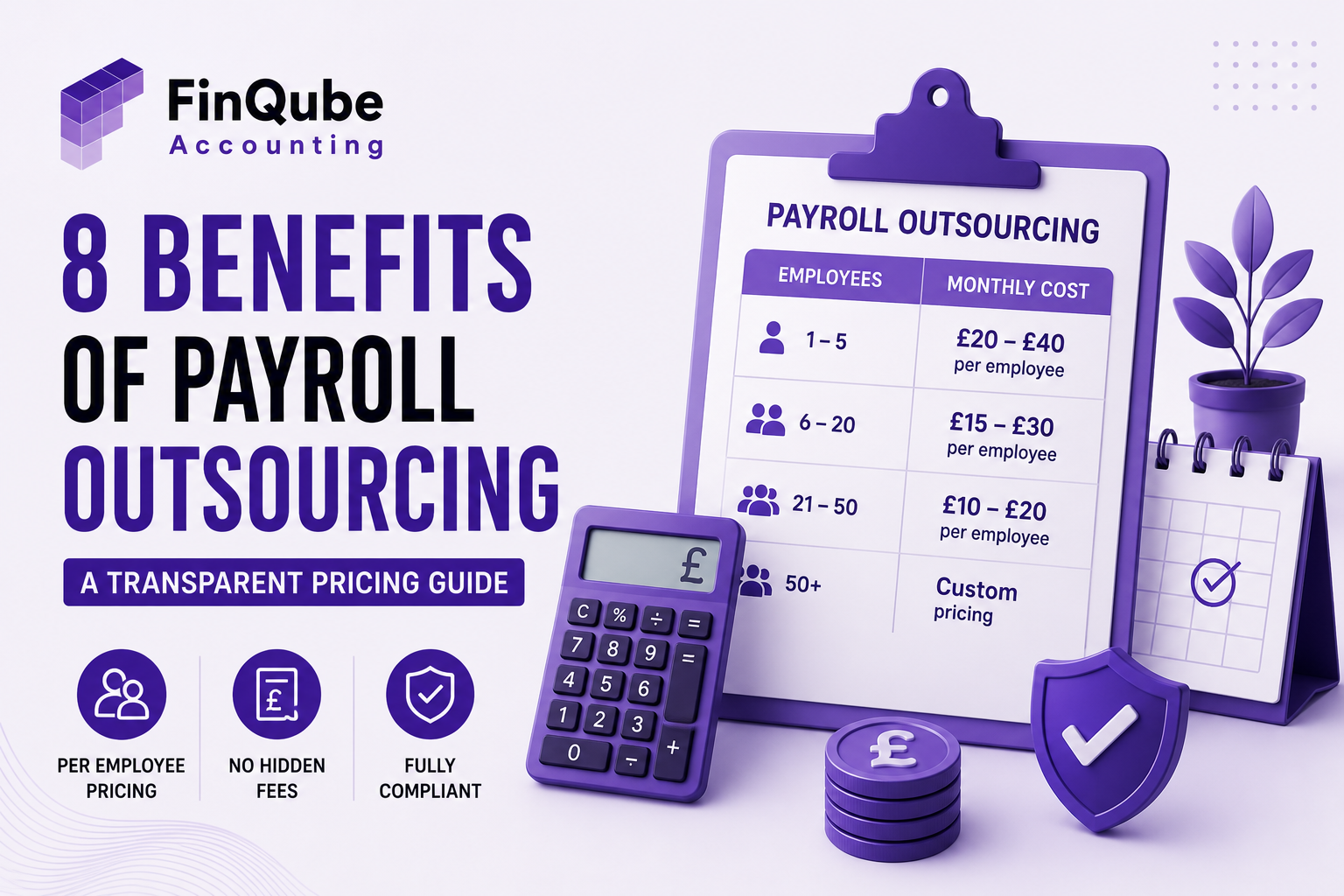
Pricing is fixed monthly. There are no surprise hourly bills. Every engagement is structured as a services agreement, not labour supply, which keeps IR35 exposure off your desk.
The minimum commitment is none. You can start, test the workflow, and step away at any point if it is not the right fit.
Learn more about how Finqube works with UK practices, or explore accounts payable and receivable outsourcing if cash flow visibility is your main pain point.
One month. No contract.
See how a dedicated Finqube accountant fits into your MTD workflow before you decide.
Start your free pilotConclusion
Accounting outsourcing has moved past simple cost-cutting. For UK firms today, it is a practical way to solve capacity problems without waiting months to hire.
The strongest outsourcing relationships share three things: clear scope, a dedicated point of contact, and a review process everyone trusts. Get those right, and outsourcing gives your team back the time to do higher-value work instead of chasing deadlines.
If capacity is holding your practice back, accounting outsourcing is worth testing before your next busy season arrives.
Start small if you are unsure. Outsource one function first, such as bookkeeping or VAT. Watch how the review process holds up. Expand the scope once you trust the workflow. This staged approach lowers risk and gives your team time to adjust.
FAQs
What is accounting outsourcing?
Accounting outsourcing means delegating tasks like bookkeeping, payroll, VAT returns, and accounts preparation to an external accountant, while your firm keeps control and final sign-off.
Is accounting outsourcing suitable for small UK firms?
Yes. Small firms often gain the most, because outsourcing adds capacity without the cost and delay of a full-time hire.
Which accounting tasks are most commonly outsourced?
Bookkeeping, payroll, VAT returns, management accounts, accounts preparation, and corporation tax support are outsourced most often.
Does outsourcing reduce quality?
Not if the provider has a proper review process. Quality depends on communication, oversight, and how errors get caught before they reach a client.
How fast can outsourced accounting support start work?
It varies by provider, but a dedicated remote accountant can usually start far faster than a new in-house hire clears recruitment and onboarding.
Is accounting outsourcing only about saving money?
No. Most UK firms outsource today to add capacity and protect service levels during growth, not purely to cut costs.
How do firms stay in control when they outsource?
Through documented processes, clear review ownership, regular updates, and full visibility into where each piece of work stands.
What happens to my data if I end the arrangement with a provider?
A reliable provider should return or delete your data on request, confirmed in writing before you sign. Ask this during the evaluation stage, not once the relationship is already underway.